
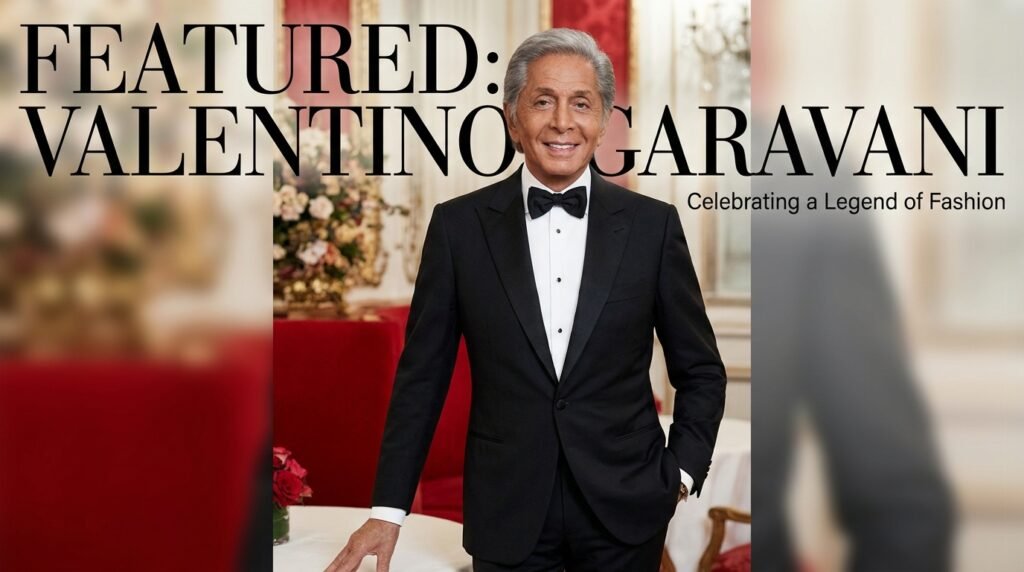

Valentino Garavani is one of the most influential fashion designers in modern history, celebrated for his elegant couture gowns, sophisticated silhouettes, and signature shade known as Valentino red. For decades, his designs have appeared on royalty, Hollywood stars, and some of the world’s most recognizable public figures. His name became synonymous with luxury, romance, and timeless Italian craftsmanship.
Understanding Valentino Garavani’s life means looking beyond beautiful dresses. His journey reflects the evolution of Italian fashion, the challenges of building an international luxury brand, and the importance of developing a recognizable creative identity. From his early ambitions in Italy to his rise on the international fashion stage, Valentino established a distinctive style that remained recognizable across generations.
This article explores Valentino Garavani’s early life, education, career milestones, personal life, business achievements, signature designs, and lasting influence on the fashion industry. It also examines what made his approach to design different and why his work continues to attract attention from fashion enthusiasts, collectors, and luxury consumers.
Who Is Valentino Garavani?
Valentino Garavani is an Italian fashion designer best known for founding the Valentino fashion house and creating luxurious haute couture and ready-to-wear collections. Born in Voghera, Italy, on May 11, 1932, he became a defining figure in international fashion during the second half of the twentieth century.
Often known simply as Valentino, he built his reputation through meticulous craftsmanship, refined tailoring, and a distinctive approach to feminine elegance. His creations became particularly associated with formal eveningwear, elaborate embroidery, and dramatic red gowns.
Valentino was not simply a designer who followed changing trends. He developed a consistent visual identity that allowed his work to remain recognizable even as fashion preferences evolved.
His influence extends beyond clothing into accessories, celebrity dressing, and the broader business of luxury branding.
Valentino Garavani’s Early Life and Education
Growing Up in Italy
Valentino Garavani grew up in Voghera, a town in northern Italy. His interest in fashion emerged at a young age, when he became fascinated by elegant clothing and the visual presentation of people.
Italy already had a rich tradition of tailoring, textiles, and artisanal production. These cultural influences helped shape the environment in which his creative ambitions developed.
Rather than treating fashion as a passing interest, Valentino pursued it as a serious professional goal. His early fascination with beautiful garments eventually led him toward formal training and international experience.
Studying Fashion in Paris
Valentino moved to Paris to study fashion and develop his technical abilities. He attended fashion institutions and gained experience working with established designers.
His professional training exposed him to the discipline of haute couture, where precision, fabric selection, fitting, and hand-finishing are essential.
Working in Paris also allowed him to understand the relationship between artistic expression and commercial fashion. He learned how designers could create distinctive collections while meeting the expectations of sophisticated clients.
This combination of Italian aesthetic sensibility and French couture training became an important foundation for his later success.
How Valentino Garavani Built His Fashion Career
Launching His Own Fashion House
In 1959, Valentino established his fashion business in Rome. Building an independent couture house required more than creative talent. It also demanded financial resources, skilled workers, reliable suppliers, and a clear understanding of the luxury market.
The early years presented challenges, as they do for many independent designers. Valentino needed to attract clients who were willing to invest in expensive, carefully constructed clothing.
His breakthrough came as his collections began receiving greater attention from fashion insiders and affluent customers.
The International Breakthrough
Valentino’s international recognition expanded during the 1960s. His designs attracted influential clients, and his collections helped establish Rome as an important destination for luxury fashion.
One of his significant early milestones came in 1962, when he presented a collection in Florence, then a major center for Italian fashion.
The response helped strengthen his reputation beyond Italy and introduced his work to a wider international audience.
His success also reflected a broader transformation in fashion. Italian designers were increasingly competing with established French couture houses by emphasizing quality, creativity, and a distinct national identity.
The Role of Giancarlo Giammetti
Giancarlo Giammetti played a crucial role in Valentino’s professional life. The two formed a long-standing personal and business partnership, with Giammetti concentrating on the commercial and organizational side of the enterprise.
Their complementary abilities helped the fashion house grow beyond the limits of a designer-led atelier.
Valentino could focus on creative direction while Giammetti helped manage the business, relationships, and expansion needed to support an international luxury label.
Their partnership illustrates an important lesson in fashion entrepreneurship: exceptional design can establish a reputation, but sustainable growth often requires equally strong business leadership.
What Made Valentino Garavani Famous?
Timeless Elegance
Valentino became famous for clothing that emphasized elegance rather than temporary novelty. His collections frequently featured flowing skirts, carefully shaped waists, luxurious fabrics, and intricate embellishments.
His approach appealed to customers seeking garments that felt special and refined.
Although his work evolved over the decades, the central emphasis on polished presentation remained consistent.
The Signature Valentino Red
One of the most recognizable elements of Valentino’s design identity is Valentino red.
The designer became closely associated with this vivid, dramatic color, which appeared in dresses and other statement pieces throughout his career.
Red offered several advantages. It created a strong visual impact, worked beautifully in formal settings, and made garments instantly recognizable in photographs.
The broader lesson is that a consistent visual signature can become a powerful brand asset. Valentino red helped connect individual designs to the larger identity of the fashion house.
Haute Couture Craftsmanship
Valentino’s couture collections demonstrated the importance of skilled construction and detailed finishing.
Haute couture garments often involve complex patterns, multiple fittings, hand-applied embellishments, and specialized techniques. These processes distinguish couture from mass-produced clothing.
His work demonstrated how craftsmanship could become part of a luxury brand’s identity rather than simply a technical requirement.
Dressing Influential Clients
Valentino’s designs became associated with prominent women in entertainment, politics, and royal circles.
His clients included Jacqueline Kennedy Onassis, Elizabeth Taylor, and other internationally recognized figures.
Such relationships helped introduce his creations to audiences who might never visit a couture salon. Photographs of important public appearances gave his designs visibility and reinforced the brand’s association with prestige.
Celebrity dressing therefore became an important part of Valentino’s cultural influence.
Valentino Garavani and Jacqueline Kennedy Onassis
Jacqueline Kennedy Onassis was among Valentino’s most notable clients.
Their association helped establish his reputation in influential American social circles. Jackie Kennedy was widely admired for her sophisticated style, and her clothing choices attracted considerable public attention.
Valentino designed garments that suited her preference for polished, understated elegance.
Their relationship also demonstrated how a designer’s reputation could grow through trusted client relationships rather than advertising alone. When a respected public figure repeatedly chose a designer, it communicated confidence in the designer’s taste and craftsmanship.
For Valentino, dressing prominent clients helped strengthen his international profile and connect Italian couture with American luxury culture.
The Growth of the Valentino Fashion Brand
Beyond Couture
As the Valentino name became more established, the business expanded beyond its original couture focus.
Luxury fashion houses often diversify into ready-to-wear clothing, handbags, shoes, fragrances, and other accessories. These categories allow brands to reach different customers while maintaining a recognizable identity.
Valentino followed this broader industry model, developing a business that extended beyond custom-made garments.
The challenge was to preserve the prestige of couture while producing collections for a wider market. A successful luxury house must maintain consistent quality, design recognition, and a clear understanding of its target customers.
Business Changes and Ownership
Valentino’s fashion business underwent significant commercial changes as the luxury industry became increasingly global.
In 1998, the Valentino fashion business was sold to an Italian conglomerate. Later ownership changes brought the brand into larger international luxury-business structures.
These transitions reflected a wider shift in the industry, where established designer names increasingly operated within corporate groups rather than independently owned fashion houses.
Although the business structure changed, Valentino’s creative identity remained central to the brand’s public recognition.
Retirement From Fashion
Valentino announced his retirement from active fashion design in 2007. His final haute couture presentation took place in Paris in January 2008.
The event marked the end of an important chapter in fashion history. His retirement did not eliminate his influence; instead, it created an opportunity to assess the legacy of a designer whose work had shaped luxury dressing for decades.
The Valentino brand continued operating after his departure, with subsequent creative leaders interpreting and developing its identity for new audiences.
Valentino Garavani’s Personal Life
Valentino maintained a relatively private personal life despite his international fame.
His long-term relationship and professional partnership with Giancarlo Giammetti became a well-known part of his story. Their shared history extended across decades and included both personal commitment and business collaboration.
Valentino also developed a reputation for appreciating art, architecture, travel, and beautiful surroundings. These interests were consistent with the visual refinement associated with his fashion work.
His lifestyle reflected the world in which he operated: international travel, important social events, couture presentations, and relationships with influential figures.
However, it is important to distinguish public information from speculation. Details about a celebrity designer’s private finances, daily routines, or personal motivations should not be treated as fact without reliable confirmation.
Valentino Garavani Net Worth and Sources of Wealth
Valentino Garavani’s wealth is frequently discussed in celebrity and luxury-fashion coverage, but an exact, independently verified current net worth is difficult to establish.
His financial success was connected to several factors:
- Fashion design: Couture and ready-to-wear collections established the foundation of his professional reputation.
- Brand ownership and business transactions: The sale and restructuring of the Valentino business formed part of the commercial history surrounding his name.
- Luxury assets: His publicly discussed lifestyle included valuable properties and an interest in art and design.
- Long-term brand influence: The continued recognition of his name helped preserve his place in luxury-fashion history.
A key distinction matters here: the value of the Valentino fashion company is not the same as Valentino Garavani’s personal wealth. The brand’s revenue, corporate valuation, and an individual’s assets are different financial measures.
Celebrity net-worth estimates often rely on incomplete information. Without transparent financial statements covering all relevant personal assets and liabilities, precise figures should be treated cautiously.
Valentino Garavani’s Influence on Modern Fashion
Creating a Recognizable Design Language
Valentino demonstrated that consistency can be a source of creative strength.
Fashion trends change rapidly, but a recognizable design language gives customers a reason to return to a particular designer. In Valentino’s case, that language included refined silhouettes, rich colors, luxurious fabrics, and formal elegance.
His career offers a useful lesson for emerging designers: a strong identity does not require every collection to look identical. It requires a coherent aesthetic that remains recognizable while allowing room for experimentation.
Redefining Red-Carpet Dressing
Valentino helped establish the importance of dramatic, carefully styled eveningwear in celebrity culture.
Red-carpet events became major opportunities for designers to demonstrate their work to global audiences. A successful appearance could generate attention across entertainment, fashion, and lifestyle media.
His gowns helped reinforce the idea that formal fashion could communicate personality, status, and artistic expression.
Supporting Italian Fashion’s Global Reputation
Valentino was part of a generation of Italian designers who helped position Italy as a leading force in luxury fashion.
His success demonstrated that Italian fashion houses could compete internationally through a combination of craftsmanship, creativity, business development, and strong branding.
His career remains relevant to students of fashion because it connects design excellence with the practical requirements of building an enduring luxury business.
Lessons Entrepreneurs Can Learn From Valentino Garavani
Valentino’s career offers several lessons that extend beyond the fashion industry.
1. Build a Clear Brand Identity
A memorable brand needs recognizable characteristics. Valentino red became an example of how color, visual presentation, and design philosophy can reinforce a company’s identity.
Businesses in other industries can apply the same principle by developing a consistent visual style, tone, and customer experience.
2. Combine Creativity With Business Strategy
Creative talent is valuable, but a successful business also needs operational discipline.
The partnership between Valentino and Giancarlo Giammetti showed how complementary skills can support long-term growth. Entrepreneurs should recognize when they need business expertise alongside their own strengths.
3. Protect Quality as the Business Grows
Expansion can create opportunities, but it can also weaken a brand if quality becomes inconsistent.
Valentino’s association with fine craftsmanship demonstrates why luxury businesses must protect the qualities that initially attracted customers.
4. Understand the Power of Reputation
Long-term relationships with influential clients helped strengthen Valentino’s standing in international fashion.
Modern businesses can apply this lesson by prioritizing trust, dependable service, and relationships that generate genuine recommendations rather than relying exclusively on promotional campaigns.
Common Misconceptions About Valentino Garavani
Several misunderstandings can arise when people research Valentino.
Valentino Garavani and Valentino are not exactly the same thing. Valentino Garavani is the designer, while Valentino is the fashion house and commercial brand associated with his name.
Valentino red is more than a marketing slogan. It refers to a recognizable design signature developed through the designer’s work and the brand’s visual identity.
The designer’s personal wealth is not the company’s valuation. Corporate sales, brand value, annual revenue, and personal net worth measure different things.
Retirement did not mean the brand disappeared. The fashion house continued producing collections after Valentino left active design, with later creative leaders contributing their own interpretations.
Understanding these distinctions helps readers separate the designer’s biography from the ongoing commercial history of the fashion house.
Frequently Asked Questions About Valentino Garavani
1. Who is Valentino Garavani?
Valentino Garavani is an Italian fashion designer who founded the Valentino fashion house. He became internationally famous for elegant haute couture, luxurious evening gowns, and his signature red designs. His career helped establish Italian fashion as a major force in the global luxury market.
2. What is Valentino Garavani famous for?
He is best known for refined couture gowns, sophisticated tailoring, intricate embellishments, and Valentino red. His designs were worn by prominent public figures, including Jacqueline Kennedy Onassis. His work helped shape modern luxury fashion and red-carpet dressing.
3. When was Valentino Garavani born?
Valentino Garavani was born on May 11, 1932, in Voghera, Italy. His early interest in fashion led him to pursue professional training in Paris before establishing his own fashion business in Rome in 1959.
4. What is Valentino Garavani’s net worth?
His exact current personal net worth is not publicly established through comprehensive, independently verified financial disclosures. Online estimates vary, and they should be treated cautiously. The value of the Valentino fashion brand should not be confused with the designer’s personal wealth.
5. Is Valentino Garavani still designing clothes?
Valentino retired from active fashion design in 2007, with his final haute couture presentation taking place in January 2008. The Valentino fashion house continued operating after his retirement under subsequent creative leadership. His design legacy remains influential in luxury fashion.
6. What is Valentino red?
Valentino red is the vivid red shade closely associated with Valentino Garavani’s design identity. It became a recognizable feature of his collections and helped distinguish his work from other luxury designers. The color represents the boldness, elegance, and visual consistency associated with his fashion legacy.
Conclusion
Valentino Garavani transformed his early passion for fashion into an internationally recognized design legacy. Through elegant couture, meticulous craftsmanship, Valentino red, and influential client relationships, he helped shape the image of modern Italian luxury.
His career also offers practical lessons about brand identity, creative consistency, business partnerships, and the importance of protecting quality as a company grows. Although he retired from active design in 2007, his influence continues through the fashion house that bears his name and the enduring appeal of his creations.
For anyone studying fashion history or luxury entrepreneurship, Valentino Garavani’s story provides a valuable example of how a distinctive creative vision can become a lasting cultural and commercial legacy.